If you're questioning your relationship with pornography or want to develop a more fulfilling relationship with your sexuality, therapy can help. Porn addiction therapy provides a sex-positive space to explore behavioral patterns, better understand your needs and values, and make more intentional choices about healthy, pleasurable, and fulfilling sexual experiences.
Key Takeaways
Therapy can help you understand the emotional, behavioral, and relational patterns that influence your relationship with pornography and sexuality.
Developing a fulfilling sexual life involves exploring your needs, values, and expectations while making intentional choices about sexual behavior.
Lasting progress takes time and may involve strengthening intimacy, building trust, and creating healthy, consensual, and pleasurable sexual experiences.
Sessions 1–2: Getting Started With Porn Addiction Therapy
The first sessions of porn addiction therapy often focus on understanding your history, exploring your relationship with pornography, and identifying what you want to accomplish. Talking about sexual behaviors and experiences can feel vulnerable, particularly if you've experienced shame, judgment, or conflicting messages about sexuality. Therapy provides a nonjudgmental, sex-positive space to explore these concerns and better understand what a healthy and fulfilling sex life means to you.
Understanding Your History and Relationship With Pornography
Everyone has a different relationship with pornography. For some, use may have gradually increased over time. Others may notice that they turn to pornography during periods of stress, loneliness, anxiety, or relationship difficulties.
During the initial sessions, you and your therapist may explore:
Your history with pornography and how your patterns have changed over time.
Situations, emotions, or experiences that influence your use.
How pornography affects your relationships, sexual experiences, or daily responsibilities.
Your feelings and beliefs about sexuality, pleasure, and intimacy.
What concerns you most about your current habits.
The goal isn't to make assumptions about your behavior or label every instance of pornography use as an addiction. Instead, therapy helps you understand your relationship with pornography, recognize whether certain patterns are creating challenges, and explore whether your sexual choices align with your needs and values.
Establishing Goals for Therapy
Once you have a better understanding of your concerns, you can begin identifying what you want to accomplish through therapy.
For some people, this means reconsidering their relationship with pornography or making changes to habits that no longer feel fulfilling. Others may want to feel more intentional about their sexual choices, develop greater sexual confidence, improve intimacy, or explore how pornography fits into their relationships.
Your goals should reflect your individual needs and what a healthy relationship with sexuality means to you. This might include exploring what pleasure, connection, consent, and sexual fulfillment look like in your life. Having a clear direction can help guide the work ahead while allowing room for your goals to evolve as you gain a better understanding of yourself.
Sessions 3–6: Building Awareness and Control
After establishing your goals, therapy can begin focusing more closely on the patterns that influence your relationship with pornography. Understanding when, why, and how certain behaviors occur can help you make more intentional choices about your sexuality.
Identifying Triggers and Understanding Your Habits
Sexual behavior can be influenced by a variety of emotional, physical, and environmental factors. Sometimes, pornography use becomes a familiar way to manage uncomfortable emotions or respond to situations that feel overwhelming.
For example, you might notice that you're more likely to turn to pornography when you're stressed after work, feeling disconnected from your partner, bored, or having difficulty sleeping. Recognizing these patterns can help you better understand the role pornography plays in your life and whether it is meeting a particular need.
Therapy can help you identify these patterns and explore what may be happening beneath the surface. Rather than focusing only on changing a behavior, you can begin understanding the needs, emotions, or experiences that may be influencing it.
Developing More Intentional Choices Around Sexuality
Once you understand your behavioral patterns, you can begin exploring how you want to respond to your needs and desires. Your therapist may help you develop strategies for making choices that feel more consistent with your personal values.
Some approaches may include:
Mindfulness: Becoming more aware of thoughts, emotions, and physical sensations without immediately reacting to them.
Emotional regulation: Learning to manage stress, anxiety, loneliness, or other difficult feelings in healthier ways.
Behavioral changes: Identifying situations that reinforce unwanted habits and creating alternative routines.
Self-compassion: Reducing shame and self-criticism so you can approach setbacks with curiosity rather than judgment.
The goal isn't necessarily to eliminate pornography use or suppress sexual desires. It's to develop a greater understanding of your choices and create a relationship with sexuality that feels healthy, fulfilling, and aligned with your values.
Sessions 7–12: Reconnecting With Yourself and Others
As you develop a better understanding of your habits and begin making changes, therapy may shift toward exploring how pornography has influenced your expectations about sex, intimacy, and relationships.
For some people, pornography use is primarily an individual concern. For others, it may have contributed to relationship conflict, secrecy, or emotional distance. This stage of therapy can help you explore those experiences and develop a more positive, connected, and fulfilling relationship with your sexuality.
Understanding How Pornography Has Shaped Your Expectations
Pornography can influence how people think about sexual experiences, physical intimacy, and what they expect from themselves or a partner. It may shape expectations about sexual performance, physical appearance, pleasure, or how intimacy should unfold. When pornography becomes a primary source of sexual information or stimulation, some people may find that their expectations don't align with their real-life experiences.
Therapy provides an opportunity to examine these expectations and consider whether they reflect your actual needs and values.
You might explore questions such as:
Do my expectations about sex reflect what I genuinely want?
Has pornography affected how I experience physical or emotional intimacy?
Do I feel pressure to perform or compare myself to unrealistic standards?
Am I comfortable expressing my sexual needs, interests, and boundaries?
What does a healthy and satisfying sex life look like for me?
Developing a more intentional relationship with your sexuality can help you move beyond external expectations and explore experiences that feel authentic, consensual, and fulfilling.
Rebuilding Trust and Strengthening Intimacy
When pornography use has affected a relationship, rebuilding trust may become an important part of the therapeutic process. A partner may feel hurt, disconnected, or uncertain about what has been happening. The person struggling with pornography use may also experience shame, defensiveness, or difficulty discussing their behavior openly.
If appropriate, a partner may be included in therapy to help address these concerns and work toward greater understanding.
This work may involve:
Creating opportunities for more honest conversations about pornography and sexual expectations.
Understanding how each partner has experienced the situation.
Addressing hurt and working toward rebuilding trust.
Exploring each partner's needs, boundaries, and expectations around sexual intimacy.
Developing healthier ways to experience emotional and physical intimacy.
Reconnecting doesn't mean partners need to have identical views about pornography or sexuality. It involves creating space for honest communication, respecting each other's boundaries, and understanding what a mutually fulfilling relationship looks like.
Sessions 13–20: Staying Strong and Building Healthy Sexuality
As therapy progresses, the focus may shift toward maintaining the changes you've made and developing habits that support your long-term goals. This stage is about taking what you've learned and applying it more consistently in everyday life.
Connecting Your Progress to Your Larger Life Goals
Developing a healthier relationship with your sexuality can create opportunities to reconnect with other parts of your life. You may find greater fulfillment in relationships, creative interests, personal growth, or activities that bring you a sense of purpose.
Therapy can help you consider how your progress supports the larger life you want to build.
Rather than measuring success only by how often you use pornography, you can also consider whether you're developing a healthier relationship with yourself, feeling more connected to others, and making choices that align with your values.
Preparing for Challenges and Maintaining Progress
Personal growth and changes in established habits aren't always straightforward. Stressful experiences, relationship difficulties, or other challenges may bring familiar patterns back into focus.
Experiencing an urge or returning to a previous behavior doesn't automatically mean you've lost your progress. These moments can provide useful information about your needs, emotional experiences, and areas where additional support may be helpful.
A plan for navigating challenges can help you maintain the progress you've made. Depending on your needs, this may include:
Identifying situations or emotional states that influence your behavioral patterns.
Developing strategies for responding to stress and difficult emotions.
Recognizing when familiar habits no longer feel aligned with your goals.
Creating routines and experiences that support a satisfying, pleasurable, and values-aligned sex life.
Establishing healthy boundaries and knowing when to seek additional support.
As you become more confident in your ability to navigate challenges, you and your therapist can also discuss whether occasional check-ins would be helpful for maintaining progress.
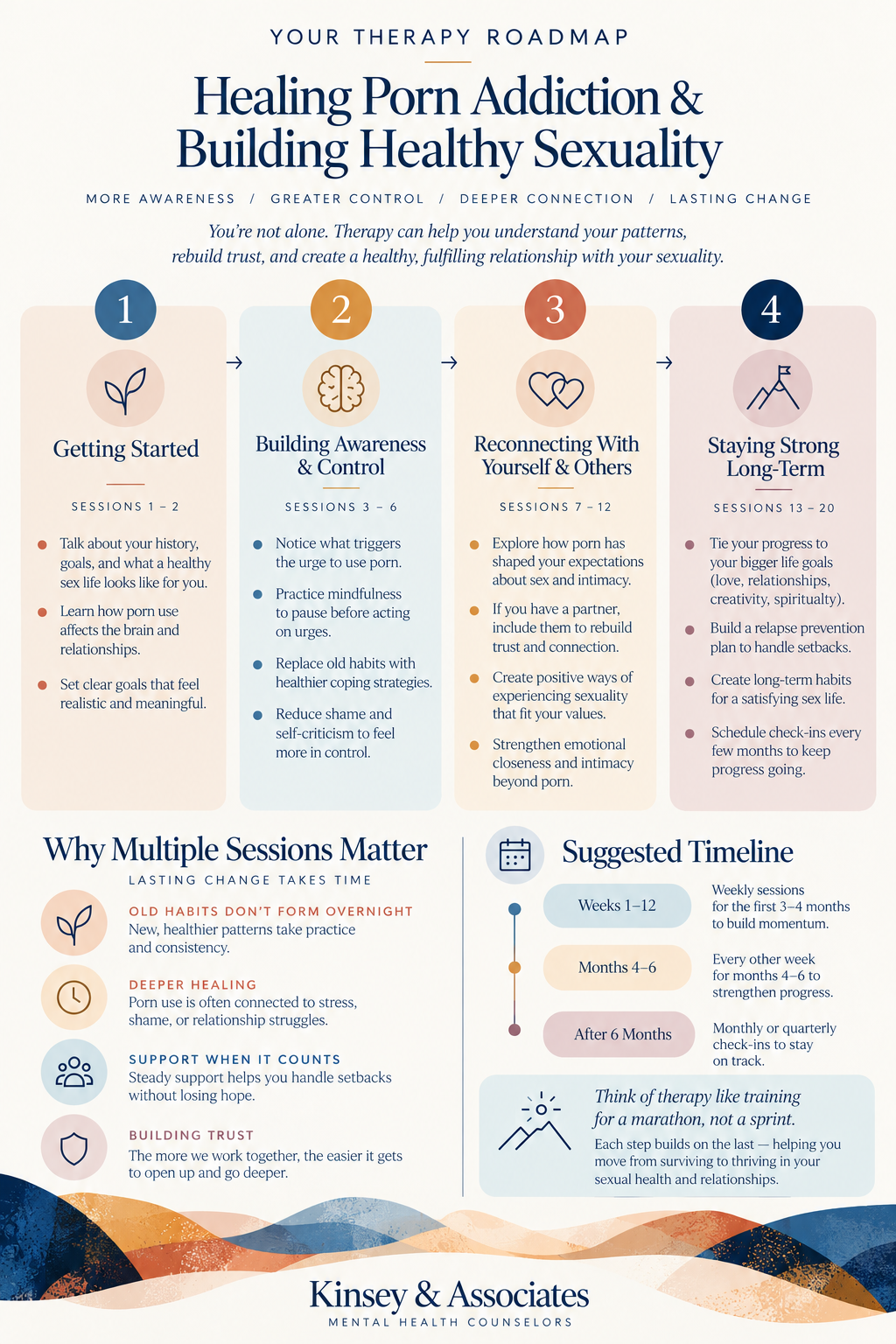
Why Does Porn Addiction Therapy Take Time?
Developing a healthier relationship with sexuality is an ongoing process of self-understanding, exploration, and growth. While some people notice shifts early in therapy, understanding established behavioral patterns and creating new ways of approaching sexuality often takes consistent effort.
There are several reasons why ongoing support can make a difference.
Old Habits Don't Form Overnight
Behaviors that have become part of your routine may take time to recognize and change. Even when you're motivated to do things differently, familiar responses can resurface during stressful or uncomfortable situations.
Developing greater awareness and exploring new ways of responding involves repeated practice and a willingness to approach yourself with patience and curiosity.
Deeper Healing May Be Part of the Process
For some people, problematic pornography use is connected to stress, shame, loneliness, or relationship struggles. Addressing the behavior without understanding these contributing factors may leave important concerns unexplored.
Therapy can provide space to examine these experiences and develop healthier ways of responding to them.
Ongoing Support Helps You Navigate Setbacks
Building a fulfilling relationship with sexuality doesn't mean you'll never experience uncertainty, conflicting feelings, or difficult moments. Having consistent support can help you work through these experiences without becoming overwhelmed by shame or discouragement.
Building Trust Requires Time
If pornography use has affected your relationship, rebuilding trust often involves more than changing a behavior. It may require honest communication, respect for each other's boundaries, and repeated experiences that help both partners feel more secure and connected.
How Do You Know if Porn Addiction Therapy Is Helping?
Progress in therapy may look different depending on your goals and circumstances. It doesn't necessarily mean eliminating every urge or never experiencing a setback. Instead, you may begin noticing changes in how you understand yourself, respond to difficult emotions, and approach your sexuality.
Some signs of progress may include:
Greater self-awareness: You recognize the situations and emotions that influence your sexual behaviors.
More intentional choices: You feel better able to make decisions about pornography and other sexual experiences that align with your needs and values.
A more fulfilling relationship with sexuality: You feel more comfortable exploring pleasure, intimacy, and sexual expression in ways that reflect your personal values.
Less shame and self-criticism: You feel more comfortable discussing your sexuality and approaching challenges with curiosity rather than judgment.
Improved intimacy: You feel more connected to yourself or your partner and more comfortable with emotional and physical closeness.
Greater alignment with your values: Your sexual choices feel more consistent with the kind of life and relationships you want.
Progress isn't always linear. There may be periods when old habits feel more difficult to change, or when relationship challenges bring up familiar emotions. These experiences can be part of the process rather than evidence that therapy isn't working.
What Happens After Six Months of Porn Addiction Therapy?
The timeline for therapy is different for everyone. Some people may reach their initial goals within a few months, while others benefit from longer-term support, particularly when they're addressing longstanding behavioral patterns or relationship concerns.
As you make progress, your therapist may recommend gradually spacing out sessions. For example, you might begin with weekly appointments, move to every-other-week sessions as you become more confident in your progress, and eventually transition to monthly or quarterly check-ins.
The goal is to develop the self-awareness, confidence, and skills you need to make intentional choices about your sexuality and maintain a fulfilling sexual life outside the therapy room.
Think of the process as building skills that you can continue using throughout your life. You don't have to get everything right immediately, and a difficult moment doesn't erase the work you've already done.
Building a Healthier Relationship With Your Sexuality
Exploring your relationship with pornography doesn't have to begin with judgment or the assumption that something is wrong with your sexuality. Therapy can help you understand your behavioral patterns, work through the emotions connected to them, and develop a more intentional and fulfilling relationship with your sexual self.
You don't need to wait until a relationship is in crisis or until your concerns feel unmanageable to seek support. Whether you want to change your pornography habits, rebuild trust with a partner, or feel more comfortable with your sexuality, working with a therapist can give you space to explore these goals without judgment.
Lee Kinsey and Associates offers sex therapy in Boston and throughout Massachusetts via telehealth. If you're ready to explore your relationship with pornography and sexuality, consider reaching out to learn more about sex therapy services.